
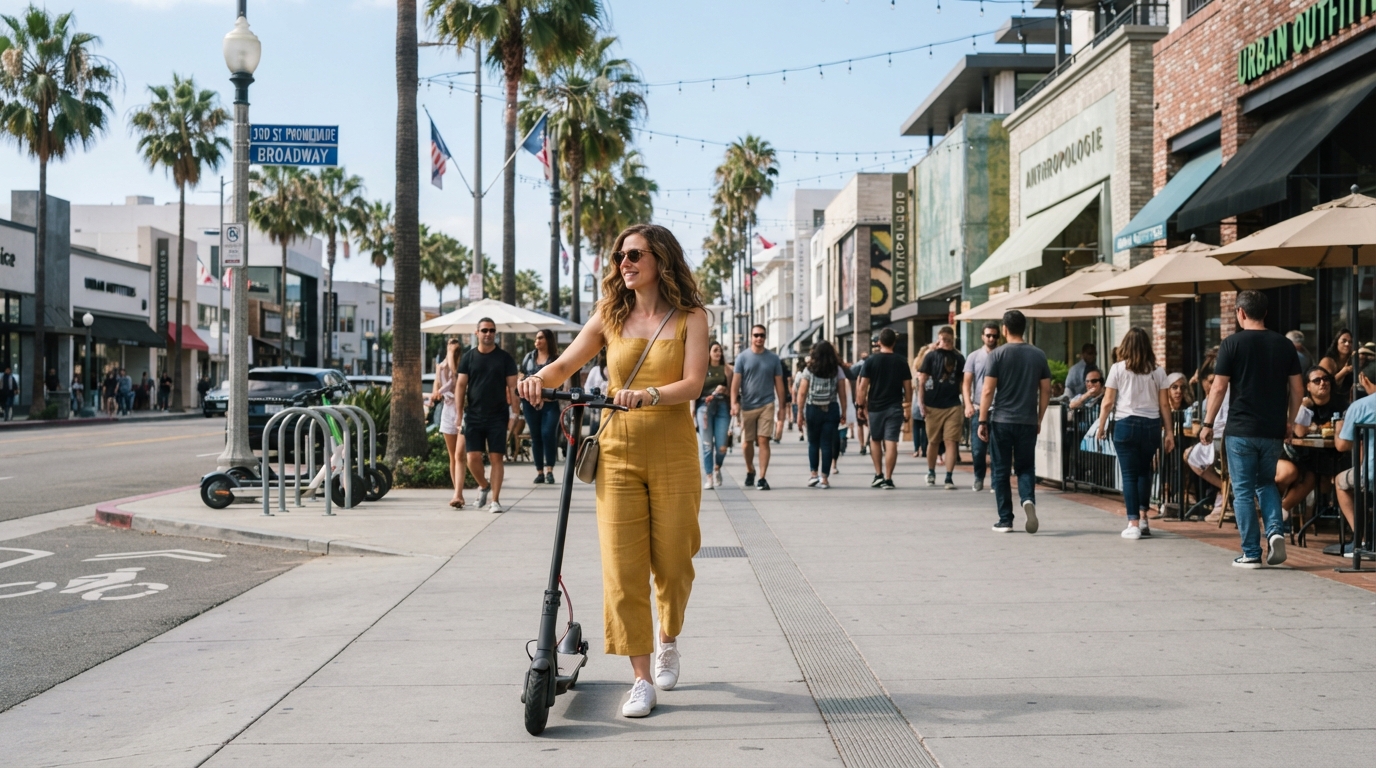
E-scooters can make it easier to travel around Santa Monica. However, they cannot be ridden everywhere. One of the most important restrictions involves Third Street Promenade.
You cannot ride an e-scooter on Third Street Promenade. The pedestrian district is treated differently from regular city streets. Riders should get off the scooter before entering the Promenade and continue on foot.
Santa Monica also restricts scooter riding on sidewalks, the Pier, Ocean Front Walk, the beach bike path, and municipal parks. Therefore, visitors need to plan their route before starting a trip.
These rules can be confusing for first-time visitors. The Promenade connects with busy downtown streets, parking garages, restaurants, transit, and the coast. A legal scooter route may suddenly lead into a pedestrian-only area.
This guide explains where scooters can and cannot go near Third Street Promenade. It also covers parking, pedestrian safety, and practical ways to move around downtown. For a broader transportation overview, see our Getting Here guide.
Third Street Promenade E-Scooter Rules Visitors Should Know
Third Street Promenade is designed primarily for people walking. The core district runs along Third Street in downtown Santa Monica. Restaurants, shops, events, and outdoor seating bring a steady flow of pedestrians into the area.
Because of that pedestrian activity, scooters are not treated the same way here as they are on regular streets. Riders should not continue through the Promenade on an electric scooter.
Instead, stop before entering the restricted area. Then, walk the scooter or use an appropriate parking location outside the restricted zone.
Where E-Scooters Are Not Allowed in Santa Monica
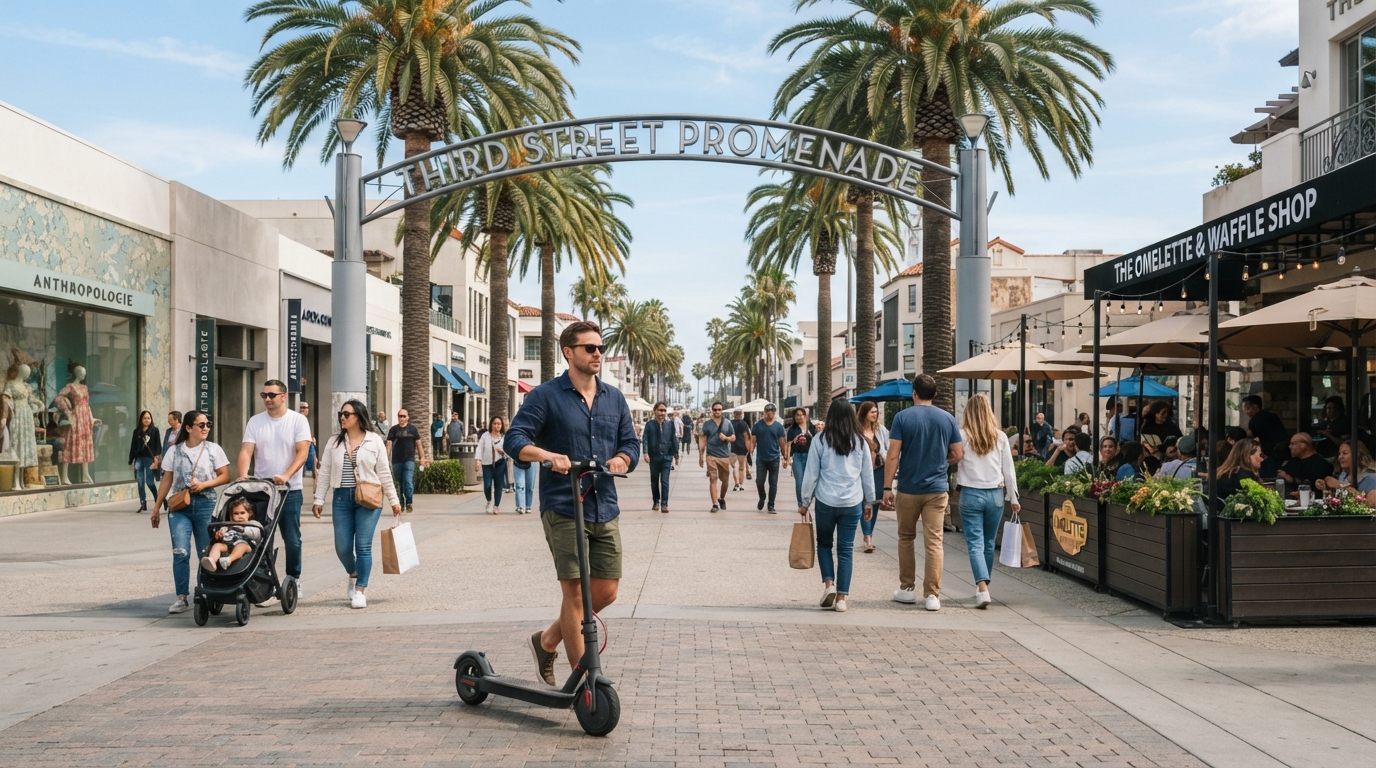
Third Street Promenade is only one restricted location. Santa Monica also limits scooters in several popular visitor areas.
That matters because a typical sightseeing route may include several of these places. A visitor might travel from downtown toward the Pier, beach, or Palisades Park. However, a scooter cannot simply follow every walking route.
Always check the route before leaving. Doing so can prevent an unexpected detour once you reach a restricted area.
Do Not Ride on Third Street Promenade
The City of Santa Monica identifies Third Street Promenade as a prohibited riding area for electric scooters. Therefore, riders should dismount before entering the pedestrian district.
This rule also helps protect the character of the Promenade. People often stop suddenly to enter stores, watch performers, meet friends, or find outdoor seating. Children and large groups may also move unpredictably.
A scooter can cover distance much faster than a pedestrian. As a result, even a slow-moving scooter can create a conflict in a crowded walking area.
If your destination is on the Promenade, use the scooter for the street portion of your trip. Then, finish the final part on foot.
Sidewalks, the Pier, and Beach Areas Have Restrictions Too
Public sidewalks are another important restricted area. Santa Monica municipal rules prohibit operating motorized scooters on public sidewalks.
The Santa Monica Pier is also off limits for e-scooter riding. In addition, scooters cannot be ridden on Ocean Front Walk or the beach bike path.
This last rule surprises some visitors. The beach bike path may look like a natural place for an electric scooter. However, Santa Monica specifically restricts motorized scooters there.
Municipal parks have restrictions as well. That includes popular areas such as Palisades Park. If you want to explore those destinations, walking is usually the better option.
For ideas on attractions that work well on foot, visit our Things to Do near Third Street Promenade guide.
Parking a Shared Scooter Without Blocking Pedestrians
Finishing the ride correctly is just as important as choosing a legal route. A poorly parked scooter can block sidewalks, curb ramps, doorways, or access for people using mobility devices.
Santa Monica’s shared-mobility regulations include specific parking standards. Shared devices should use designated drop zones when available. Operators must also work to prevent sidewalk clutter and blocked pedestrian routes.
Third Street Promenade itself is not an approved deployment or parking area for shared mobility devices under the city’s program rules. Therefore, do not expect to leave a rental scooter in the middle of the pedestrian district.
Keep Sidewalks, Ramps, and Crossings Clear
When you finish a shared scooter trip, look for an approved drop zone. These locations help keep devices organized and away from the main walking path.
If an approved parking area is available, use it instead of choosing the most convenient open space. Never leave a scooter across a curb ramp or crosswalk.
Also avoid blocking building entrances and transit stops. People using wheelchairs, walkers, strollers, or other mobility devices need enough room to pass.
A scooter lying across a sidewalk can become a trip hazard. It can also force someone into an unsafe route around the device.
Shared-mobility apps may provide parking instructions before ending a trip. Follow those instructions and confirm that the scooter is stable before walking away.
How Riders and Pedestrians Can Navigate Downtown Santa Monica More Safely
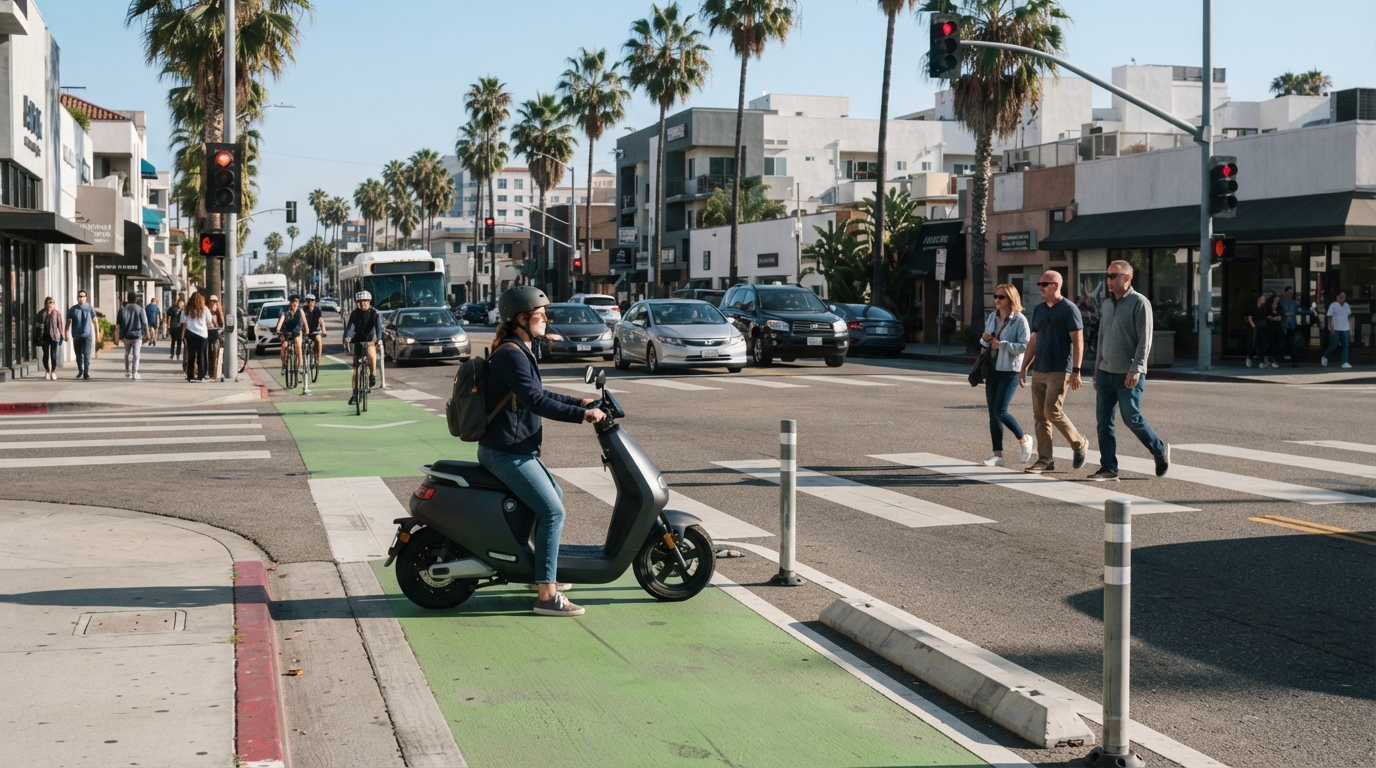
Third Street Promenade may be pedestrian-focused, but the surrounding downtown area is not. Cars, buses, bicycles, scooters, delivery vehicles, and pedestrians all use nearby streets.
That makes the transition between the Promenade and surrounding streets especially important. Riders may need to dismount in one area and return to a legal route several blocks later.
Visitors should also remember that downtown conditions change throughout the day. Morning traffic can feel different from an evening event. Weekends may bring larger pedestrian crowds.
Before starting a scooter trip, decide where you plan to stop. A little route planning can prevent the need to ride through a restricted area.
Plan Around Crossings, Garage Entrances, and Busy Streets
Intersections around Third Street Promenade can carry significant pedestrian activity. Drivers may also be turning toward parking garages or looking for open spaces.
If you are riding on an allowed street, stay alert near intersections. Do not assume a turning driver has seen you.
Pedestrians should use the same caution. A quiet pedestrian block can lead directly into an active downtown street. Look for traffic before entering a crossing.
Parking garage entrances create another possible conflict point. Cars often cross sidewalks while entering or leaving a garage. Pedestrians and riders should slow down around these areas.
Dismount When the Route Becomes Pedestrian-Focused
Sometimes the safest choice is also the simplest one. If your route reaches Third Street Promenade, get off the scooter and walk.
The same idea works when conditions become crowded or confusing. Walking a short distance can be easier than searching for a legal route through a busy pedestrian area.
Once you return to a street where riding is allowed, check traffic before starting again. Enter the roadway carefully and travel in the proper direction.
Santa Monica has also been improving parts of its bike and scooter network. The Broadway Safety Project, for example, includes protected bike infrastructure, bike boxes, crosswalk upgrades, and other safety treatments east of downtown.
Even with better infrastructure, riders still need to watch for pedestrians and turning vehicles. Infrastructure can reduce conflicts, but it cannot remove every risk.
If you plan to combine scooters with public transportation, our Third Street Promenade parking and transportation guide covers Metro, buses, parking, and walking options.
Visitors should also avoid riding after drinking alcohol. If you plan to use the Third Street Promenade Visitor Guide to explore dining or the Entertainment Zone, walk or use public transportation afterward instead.
A simple Santa Monica itinerary can avoid many scooter problems. Use a scooter or transit to reach downtown. Park the device legally before entering the Promenade. Then, explore Third Street on foot.
You can continue walking toward Ocean Avenue, restaurants, shopping, and other nearby destinations. For dining ideas, see our Eat & Drink guide. You can also browse our Third Street Promenade Shopping Guide.
The main rule is easy to remember: Third Street Promenade is for walking, not e-scooter riding. Sidewalks, the Pier, the beach bike path, Ocean Front Walk, and municipal parks also have restrictions.
Plan your route before you ride. Park shared devices without blocking pedestrian access. Most importantly, slow down around crossings and places where people and vehicles meet.
With a little planning, scooters can still be useful for getting around Santa Monica. Just know when to ride, when to park, and when to continue your trip on foot.